Publications

Systems Framework for Analysis of Policy and Strategy Update

Systems Framework for Analysis of Policy and Strategy Update

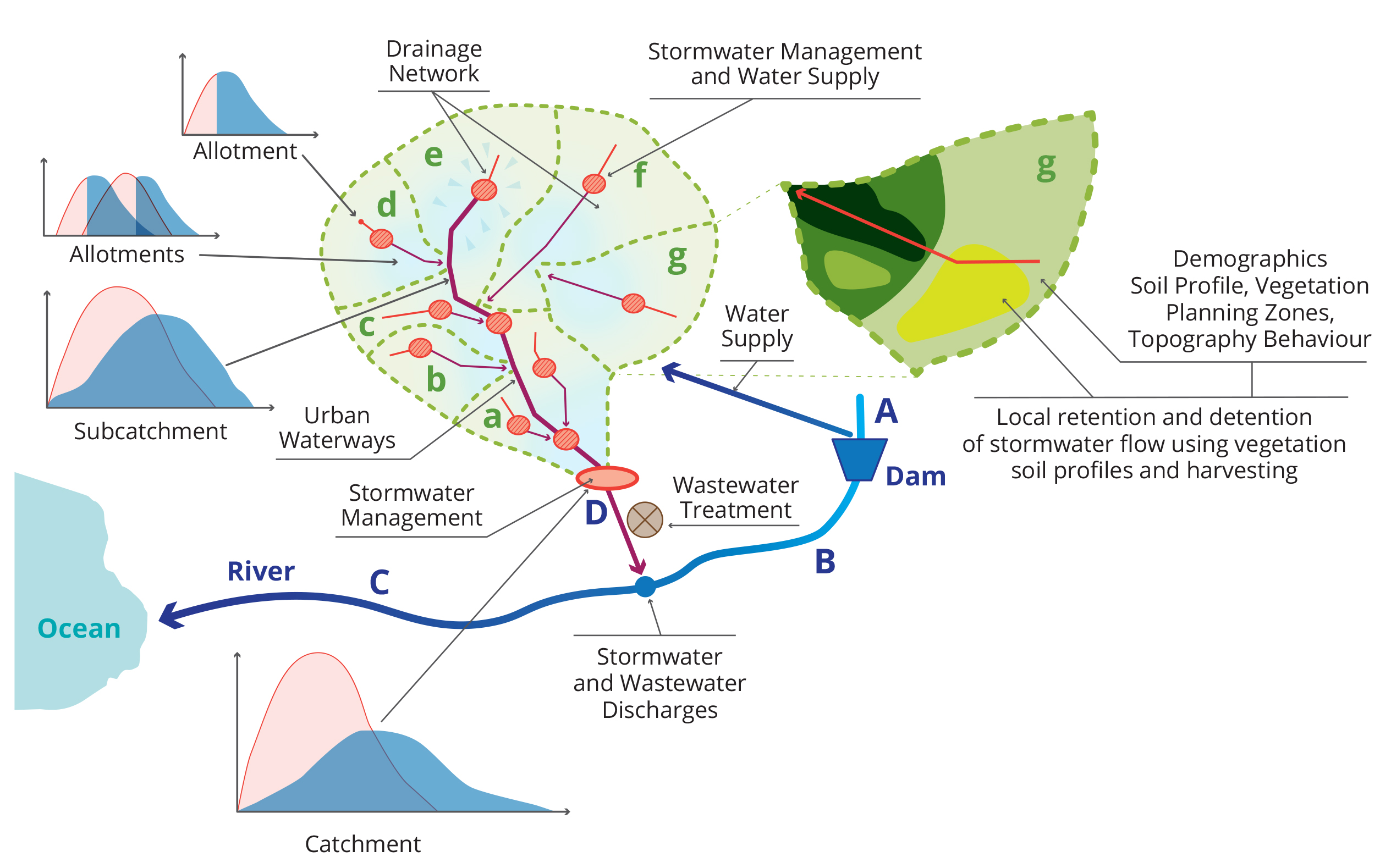
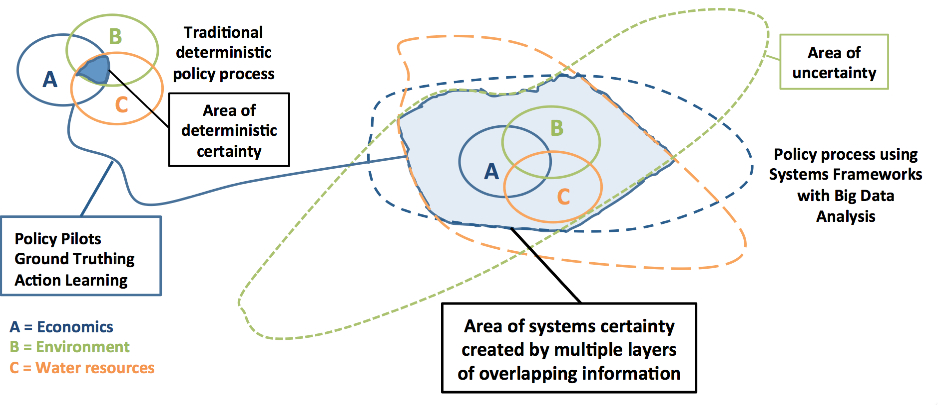
Systems Framework for analysis of policy and strategy by Peter J Coombes and Michael E Barry. Acknowledged by Engineers Australia as one of the best scientific contributions to hydrology and water resources during 2014/15. The Systems Framework is discussed in many publications focused on describing projects or policies. This presentation provides an overview of the Systems Framework methodologies for analysis of policy, strategy and design developed over the last decade. The framework integrates water cycle, environmental and economic processes from the “bottom up” using all available data and integrating spatial and temporal scales of behaviour. Advances in computing power allowed this quantum process to be underpinned by continuous simulation of local behaviours and Monte Carlo methods. This expansionist approach to analysis reveals hidden challenges and opportunities for urban areas. The Systems Framework can be reliably and robustly applied to detailed and targeted ‘what if’ analyses, including assessments of future water security and economics under a range of climatic and population growth scenarios, and future alternative strategies or policies.
Decade of performance of local water cycle management

Decade of performance of local water cycle management

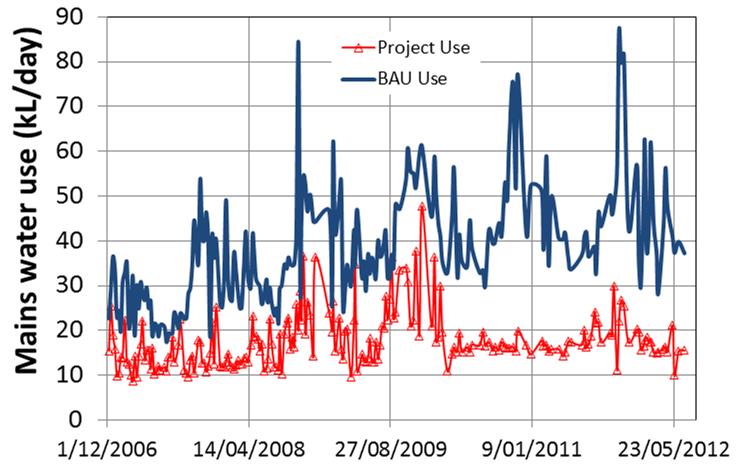
A Decade of Observations of Local Water Cycle Management at the Buderim Escape Project. Presentation at 1:10 pm on Wednesday 9 December 2015 at HWRS2015 in Hobart. Peter Coombes and Greg Downes. Buderim Escape was designed to minimise impacts on surrounding environments and water resources by utilising rainwater harvesting, water efficient appliances, stormwater retention, vegetation and onsite treatment and reuse of wastewater. The project provides diminished impacts on regional water resources and distribution infrastructure by reducing average and peak demands for mains water by 61% and 68%, respectively. Similarly, the project mitigates impacts on waterways by reducing the volumes (21%) and peak discharges (11%) of stormwater runoff. Importantly, the design of the project avoided construction of infrastructure in the surrounding forests and ephemeral waterways, thereby minimising disturbance of natural assets.

Transitioning from Drainage to Water Cycle Management

Transitioning from Drainage to Water Cycle Management

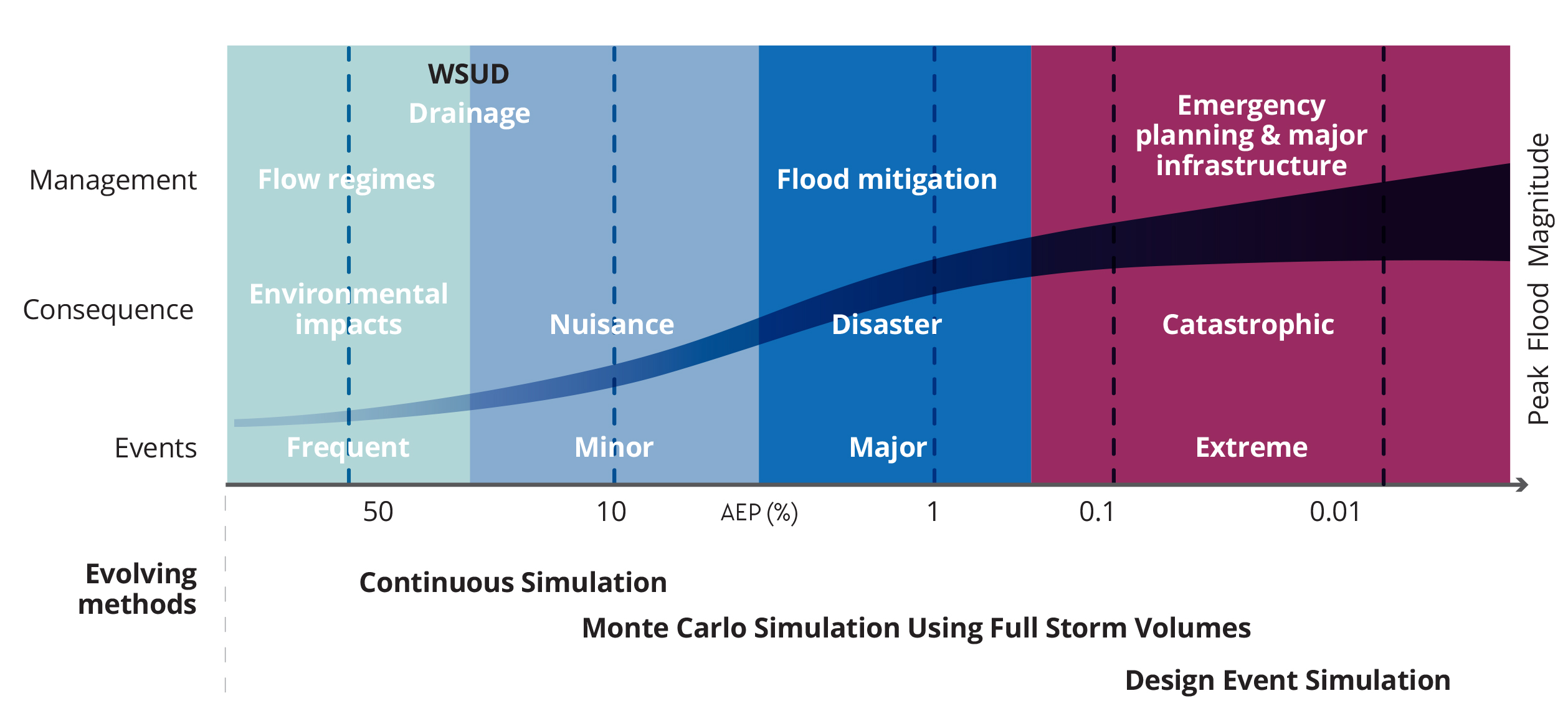
Transitioning from drainage to urban water cycle management. Presentation at HWRS2015 in Hobart at 4:20 pm on Tuesday 8 December 2015 by Peter Coombes. There is a need to expand the stormwater elements of Australian Rainfall and Runoff to accommodate contemporary and integrated approaches to urban water cycle management, starting with integration of land and water planning across time horizons and spatial scales.

Evolving Urban Form, Flooding, Rational Method

Evolving Urban Form, Flooding, Rational Method

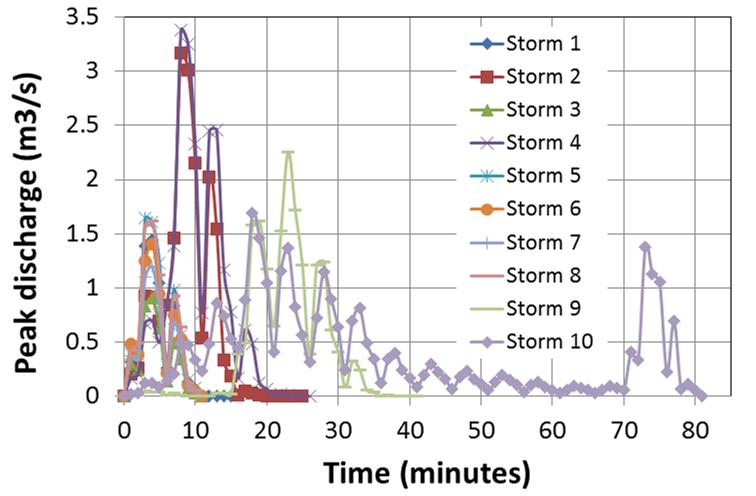
Is the Science and Data underpinning the Rational Method Robust for use in Evolving Urban Catchments? Presentation at HWRS2015 in Hobart at 3:40 pm on Wednesday 9 December 2015. Peter Coombes, Mark Babister and Tony McAlister. This presentation is concerned with the use of the Rational Method to estimate peak stormwater runoff rates for the design of drainage infrastructure in contemporary urban catchments. The Rational Method is widely utilised around the world and is simple to implement, however peak flow predictions do not explicitly represent the complex nature of the ‘real’ processes occurring within a catchment. This concern is particularly relevant to modern stormwater management methods, such as Water Sensitive Urban Design (WSUD), that include integrated solutions involving retention, slow drainage, harvesting and reuse of stormwater.

Sustainable building economics – media clarification

Sustainable building economics – media clarification

Publication by Peter Coombes, Michael Smit and Garth MacDonald on ” A case study: resolving boundary conditions in economic analysis of distributed solutions for water cycle management” – media clarification. We pleased at the level of interest in the report about water servicing costs, sustainable buildings policy and rainwater harvesting. The newspaper article in the Sunshine Coast Daily on 23 November 2015 has added two different elements of the report, the whole of society benefit and the water utility profits, to derive a figure of $7.3 billion. This figure was subsequently quoted by the ABC Sunshine Coast Radio and is not correct. The whole of community benefit is actually $3.5 billion between now and 2056, the increased profitability of water utilities of $3.8 billion is a different macroeconomic benefit that cannot be added to the whole of society benefit. We thank the Sunshine Coast Daily and the ABC Sunshine Coast for supporting this important discussion.

Costs of Water Grids with Security Infrastructure Next

Costs of Water Grids with Security Infrastructure Next

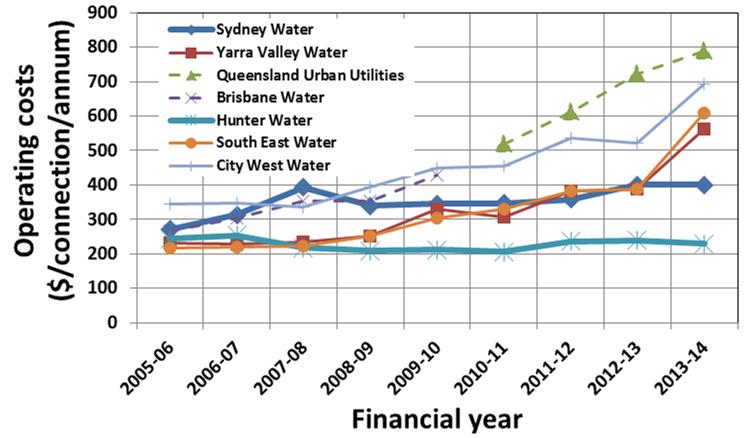
On Wednesday 21 October, our paper addressing the impacts of engineering and economic assumptions on government policy was presented to the WSUD2015 Conference. This discussion provided audited water industry data to highlight the dramatic impacts of assumptions on government policy in the South East Queensland (SEQ) region. For more details read the paper here. A combination of actions, strategies and solutions across multiple scale for water management avoided a disaster in our cities. Citizens reduced water use in cities by over 50% by changing behaviour, using rainwater, installing water efficient appliances and helpful response to government restrictions on water use. The urgency of drought also motivated collaboration and solutions across society – barriers to a range of water solutions were overcome by the seriousness of the drought. However, since the end of drought there has been a rush to dismiss most solutions within our cities in favour of water grids supplied by large scale water security infrastructure such as desalination and drinking wastewater. It seems that the water savings provided by our communities are banked by government and these savings are included in our future water resources planning but most of the solutions that created these changes in water use are no longer supported (for example programs supporting water efficient appliances and rainwater harvesting have been abandoned). The future demand profiles may be higher than assumed in water strategies. An example of this is provided in the above paper. Do we fully understand the economic and environmental costs of these policies? Do we fully understand the economic and environmental costs of these policies which may be greater than $12/kL in cities and up to $50/kL in regional Victoria?

Costs of Water Grids with Security Infrastructure

Costs of Water Grids with Security Infrastructure

On Wednesday 21 October, our paper addressing the impacts of engineering and economic assumptions on government policy was presented to the WSUD2015 Conference. This discussion provided audited water industry data to highlight the dramatic impacts of assumptions on government policy. A combination of actions, strategies and solutions across multiple scale avoided a disaster in our cities. However, since the end of drought there has been a rush to dismiss most solutions within our cities in favour of water grids supplied by large scale water security infrastructure such as desalination and drinking wastewater. Do we fully understand the economic and environmental costs of these policies which may be greater than $12/kL in cities and up to $50/kL in regional Victoria?

Impact of Economic Assumptions on Policy

Impact of Economic Assumptions on Policy

Presentation by Dr Peter Coombes on Wednesday 21 October at 3:30 pm at the WSUD2015 Conference at Dockside, Cockle Bay in Sydney . This presentation examines the impacts of economic assumptions on policy decisions. Economic analysis of targets for sustainable buildings by the Queensland Competition Authority (QCA) and the Rainwater Harvesting Association of Australia (RHAA) is examined as a case study. Contested points include which costs and benefits are inside or outside the boundaries of legitimate and recognised consideration. This presentation refers to those differences as boundary conditions and considers how these assumptions affect the outcome of analysis and government policy.

Systems Framework for Analysis of Policy and Strategy

Systems Framework for Analysis of Policy and Strategy

Presentation by Dr Peter Coombes on Tuesday 20 October at 4:30 pm at the WSUD2015 Conference at Dockside, Cockle Bay in Sydney . The Systems Framework is discussed in many publications focused on describing projects or policies. This presentation provides an overview of the Systems Framework methodologies for analysis of policy, strategy and design developed over the last decade. The framework integrates water cycle, environmental and economic processes from the “bottom up” using all available data and integrating spatial and temporal scales of behaviour.

Transitioning Drainage to Urban Water Cycle Management

Transitioning Drainage to Urban Water Cycle Management

Presentation by Dr Peter Coombes on Monday 19 October at the Australian Rainfall and Runoff seminar at the UTS function centre in the UTS Building 10 (Level 10) in Ultimo. This presentation discusses the need to transition the stormwater drainage components of Australian Rainfall and Runoff to accommodate contemporary and integrated approaches to urban water cycle management. The process starts with the integration of land and water planning across time horizons and spatial scales.

c